

Bali Island School
International school in Sanur. Ages 3–18. Curriculum: IB.
Parent perspectives
These anonymized parent perspectives are intended to help families prepare questions for a tour or admissions conversation.
Bali Island School had a warm, community feel that helped us settle in. Our 7-year-old made friends quickly and came home feeling positive about school.
We chose Bali Island School for the IB approach. It’s reassuring to have a learning pathway that feels internationally portable if our plans change.
Being based in Sanur made the routine manageable, and the school’s communication was straightforward. The day-to-day felt well organised.
Quick notes
- IB programmes from Preschool to Grade 12 (PYP, MYP, and Diploma).
- A long-running international school in Bali.
- Support services are available (details vary by student).
Recommended guides
View all guidesHow to Choose a School in Bali
School Fees in Bali: How to Compare Total First‑Year Cost
Admissions in Bali: Timeline, Documents, and What Happens Next
In-depth profile
In Bali, “international school” can mean a lot of things. Sometimes it means a small learning hub with big dreams. Sometimes it means a brand-new campus with a fresh curriculum plan. And sometimes it means a school that has been quietly doing the work, year after year, long enough to become part of the island’s educational backbone.
Bali Island School (BIS) belongs to that last category.
It’s an IB Continuum school in Sanur, offering the full arc: the Primary Years Programme (PYP), the Middle Years Programme (MYP), and the Diploma Programme (DP). For many families, that’s the headline. But the deeper value is what that continuity creates: a shared language of learning that can carry a student from the early years to graduation without having to “translate” their education every few years.
What the IB continuum actually changes
The IB is sometimes talked about like a label — as if the acronym itself guarantees quality. It doesn’t.
What it does guarantee is a framework. And frameworks matter, especially when your family is living internationally.
In an IB Continuum school, students are usually encouraged to:
- Ask questions, not just answer them
- Make connections across subjects
- Reflect on how they learn
- Build independence over time
In the best cases, this produces learners who are curious, capable, and comfortable with complexity. In the weaker cases, it can turn into lots of projects without enough fundamentals. So the question is not “Is IB good?” The question is:
How does this school teach the fundamentals inside the IB framework?
When you tour BIS, ask to see:
- Student writing at different ages
- Maths progression across year levels
- How feedback is given (rubrics, conferences, teacher comments)
- What support looks like when a student struggles
A school can be inquiry-based and skill-strong. That’s the sweet spot.
The Sanur factor
Sanur has a different tempo than Canggu or Ubud. Mornings feel calmer. The road network is simpler. The sea is close enough to smell it in the air.
For school life, that matters. Not because beach air improves grades — but because a workable daily routine improves everything. If you live in Sanur (or nearby parts of Denpasar), BIS can be one of the most commute-friendly “big curriculum” options on the island.
If you live far away, you’ll want to test the drive realistically. With older students, long commutes can be manageable. With younger children, they can be hard.
Fees and what they signal (and what they don’t)
The fees listed on our site for BIS are Rp 76,850,000–Rp 330,265,000 /year (annual, IDR). The range reflects different age levels, plus the reality that international schools often have extra charges beyond tuition.
Here’s the trick: the cost is not only about “expensive vs affordable.” It’s also about what the school includes, and how transparent they are about it.
Ask about:
- Capital levies and development fees
- Application fees
- Materials, devices, and textbooks
- Sports and activities
- Any required uniforms or special items
Transparency is a form of respect. You’ll feel it quickly.
Who BIS tends to suit
BIS is often a strong fit for families who want:
- A stable, long-running international school community
- Full IB Continuum from early years to graduation
- A campus and system built for a wide age range (not only preschool, not only high school)
- A school that can support international transitions and university pathways
It may be less ideal if:
- You are looking for a very alternative “Bali nature school” experience
- You want a tiny, intimate micro-school feel
- You prefer a national curriculum pathway (Australian, Singapore, etc.) rather than IB
A day that makes sense (without pretending to know your child)
I always hesitate when people promise “a perfect day at school.” No school can promise that. Kids are not machines. Some days they are brave; some days they are tired; some days they are quietly homesick and can’t explain why.
But a good school can offer a day that makes sense.
A day with:
- Familiar routines
- Classrooms that feel safe
- Teachers who notice
- Work that is challenging without being crushing
- Enough movement, enough play, enough time to breathe
A school like BIS, with a long-established structure, often has the systems to deliver that kind of day more consistently than a brand-new school still finding its rhythm.
The questions that matter most
When families tour BIS, they often ask about curriculum and fees first. That’s normal. But the questions that tend to predict long-term happiness are different:
- How does the school communicate with parents (and how often)?
- What happens when a student is struggling socially, not academically?
- What support exists for learning differences?
- How is bullying handled?
- What does “wellbeing” look like here in practice?
The answers tell you whether your child will be supported as a whole person — not just as a student.
The quiet advantage of an established community
There’s one more thing an established school can offer: a community that already knows how to welcome newcomers.
In Bali, families arrive all year long. They move again. They rotate. A school that has been doing international transitions for decades often becomes skilled at helping kids land.
That matters more than people admit.
Because when your child feels like they belong, learning happens faster — not because the curriculum is different, but because your child’s nervous system is calm enough to focus.
If BIS feels like the kind of place where your child could belong, it deserves a spot on your shortlist.
A small detail to look for on campus
While you walk around, notice what is on the walls.
Are there only posters made by adults? Or do you see student thinking — messy drafts, mind maps, questions, reflections, experiments that didn’t work the first time?
IB schools often talk about “learner profiles” and big values. The real proof is whether students are allowed to show their process, not only their polished results. If you see real work-in-progress, that’s a good sign. It means learning is happening in public, not hidden behind perfection.
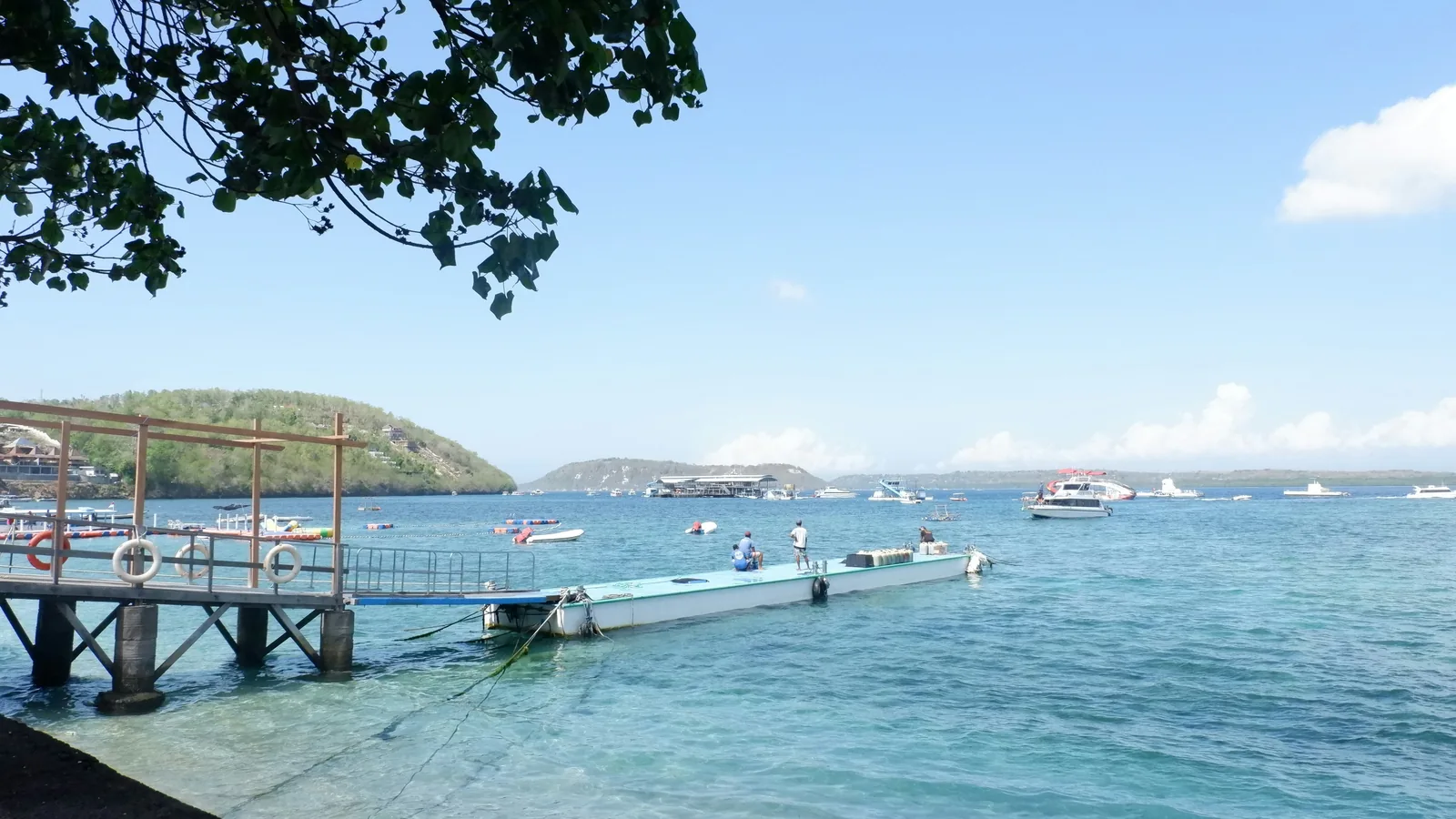
Photos on this page are placeholders. Replace them with school-provided images when available.
Similar schools



Areas families also consider
These areas appear often among similar schools. Use them as quick shortcuts while you’re shortlisting.
FAQ
Curriculum
IB
Ages
3–18
Fees
Rp 76,850,000–Rp 330,265,000 /year
Type
International school
Address
Jalan Danau Buyan IV No. 15, Sanur, Denpasar, Bali 80228
Map link: Google Maps
Claim & upgrade this profile
School operator? You can claim this page to update fees, admissions notes, and photos. Verified and featured options are available and will be clearly labeled.