

Green School Bali
International school near Ubud. Ages 3–18. Hands-on learning with a strong sustainability focus.
Parent perspectives
These anonymized parent perspectives are intended to help families prepare questions for a tour or admissions conversation.
Green School Bali had a warm, community feel that helped us settle in. Our 7-year-old made friends quickly and came home feeling positive about school.
We chose Green School Bali for a sustainability-first ethos. It’s reassuring to have a learning pathway that feels internationally portable if our plans change.
The admin side was refreshingly clear — fees, schedules, and expectations were easy to understand. That kind of transparency mattered to us.
Quick notes
- Hands-on, project-based learning with lots of outdoor time.
- Tuition depends on grade level (Early Years through High School).
- Fees shown are tuition only — ask about admissions fees and other annual costs.
Recommended guides
View all guidesHow to Choose a School in Bali
School Fees in Bali: How to Compare Total First‑Year Cost
Admissions in Bali: Timeline, Documents, and What Happens Next
In-depth profile
You can learn about sustainability in a normal classroom. You can also learn it the way Bali teaches it best: by living it.
That’s the simplest way to understand Green School Bali. This is a school built around a question that sounds small but changes everything: What if the campus itself was part of the curriculum? Not a backdrop. Not a “nice-to-have.” A daily reminder that learning is not just something you do at a desk. It’s something you do with your hands, your habits, and the choices you make when nobody is grading you.
Nature School is famous for its nature-first feel. If you’re coming from a more traditional school system, the first surprise is not the subjects. It’s the setting. You don’t get the “inside is for learning, outside is for play” split. Here, the outside is often the classroom. That one shift changes how kids move through the day. It changes how they sit, how they talk, and how they think about the world.
The big idea: school that feels alive
Parents ask a practical question early: “Will my child still learn the basics?” The honest answer is yes — and the more important question is how. Nature School is known for hands-on, project-based learning. The goal is not only content. It’s confidence. The kind that shows up when a student has to test an idea, explain it, improve it, and try again.
A useful way to picture this is to think about motivation. In many schools, motivation is something adults push from the outside: reminders, deadlines, marks. Nature School tries to build motivation from the inside: ownership, purpose, curiosity. That doesn’t mean it’s “easy.” It means the work can feel more personal. Kids are often asked to connect learning to real life. That can be powerful for students who light up when they see meaning in what they’re doing.
Who tends to love it
Nature School is a strong fit for families who care about:
- Learning by doing. If your child learns best through movement, making, building, testing, and exploring, this environment can feel like a relief.
- Values in the open. Some schools keep values vague. Here, they’re part of the daily language: responsibility, community, impact, care for the world around you.
- A “whole child” approach. Many Bali schools talk about this. Nature School is one of the places where you can actually feel it: academics alongside emotional skills, collaboration, creativity, and time in nature.
It can also be a good fit for kids who struggled with the pressure and pace of a very rigid system. Not because expectations disappear, but because the shape of the day is different. Some children relax. When they relax, they learn.
The questions that matter (ask these on your tour)
A school like this can be a dream for one child and a poor match for another. A good tour is not about the photo-op. It’s about details.
Here are the questions I’d ask, in plain language:
- How do you measure progress? Not just grades. How do teachers track growth? How do they support a child who’s behind — or bored?
- How much structure is in a typical day? Some kids thrive with freedom. Others need clear routines. Ask for a sample schedule.
- What happens in the first month for new students? Bali relocations are emotional. Ask about onboarding, buddy systems, and transition support.
- What support exists for learning differences? Don’t assume. Ask directly what support is available and what isn’t.
- How do you handle heat, rain, bugs, and outdoor reality? Nature-based learning is beautiful, but it is still Bali. Ask how they keep children comfortable and focused.
- What’s included in fees — and what isn’t? Camps, uniforms, materials, excursions. Get the list in writing.
The Bali factor most people underestimate: commute
Nature School has a reputation strong enough that families sometimes choose it first and then look for a house. That’s smart. Bali traffic can be a mood killer. A short distance on a map can become a long daily story.
Do a test drive at the real times you will travel. Not once. Twice. Morning can be smooth. Afternoon can surprise you. If your child is young, a long commute can quietly drain them. That shows up later as “behavior” or “fatigue.” It’s not. It’s just a tired kid.
What you’ll want to notice while you’re there
When you visit, look for small signals:
- Are students engaged or simply supervised?
- Do teachers speak to children with patience and clarity?
- Is the work on the walls thoughtful, or is it just decoration?
- Do you see quiet spaces as well as active ones?
- Do kids seem comfortable moving between indoor and outdoor learning?
These details tell you more than a brochure ever will.
A final thought
Nature School is not trying to be “a normal school in a beautiful place.” It’s trying to be a different kind of school — one that treats the environment, community, and real-world problem solving as central, not optional.
If your family wants that — if you want your child to come home talking about ideas instead of just homework — it’s worth a serious look.
And if you’re unsure, that’s okay. The best approach is simple: tour, ask uncomfortable questions, and watch how your child reacts. The child usually tells you the truth first.
If you need a more traditional pathway
Some families love the philosophy but still want reassurance about “what comes next” — especially for older students. If that’s you, ask how the school supports transitions between systems (moving countries, switching curricula, applying to universities). A good school will answer this with examples, not vague promises. The right question is not “Do students go to good universities?” It’s “How do you help this student, with this learning style, move forward with options?”
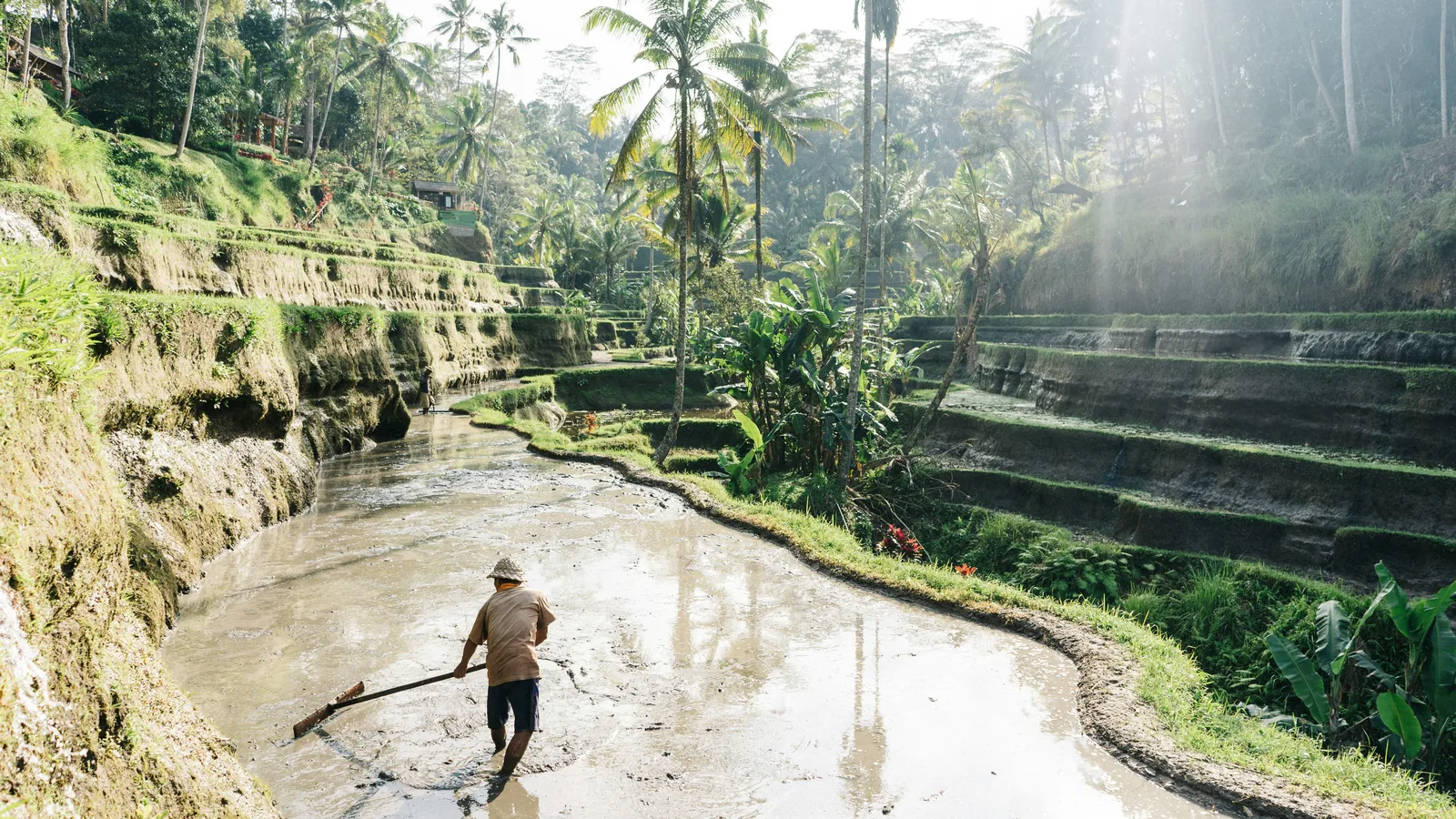
Photos on this page are placeholders. Replace them with school-provided images when available.
Similar schools




FAQ
Curriculum
Outdoor, Sustainability
Ages
3–18
Fees
Rp 177,800,000–Rp 319,030,000 /year
Type
International school
Address
Near Ubud (Sibang Kaja / Abiansemal area, Bali)
Map link: Google Maps
Claim & upgrade this profile
School operator? You can claim this page to update fees, admissions notes, and photos. Verified and featured options are available and will be clearly labeled.